Bird Cage Cleaning Routine: Faster, Safer Steps

Quick jump to what you need
A solid bird cage cleaning routine is not about scrubbing harder. It is about ordering the steps so you do not spread mess or stress your bird. I have kept parrots for over a decade, and the routine below is the one I wish someone had handed me early on: daily 10 minutes, weekly 30 to 40 minutes, monthly 60 minutes. That is it.
Here is the core idea: clean from top to bottom, dry to wet, and cage to bird-safe zone. If you reverse that order, you end up wiping the same surface twice and your bird picks up on the chaos.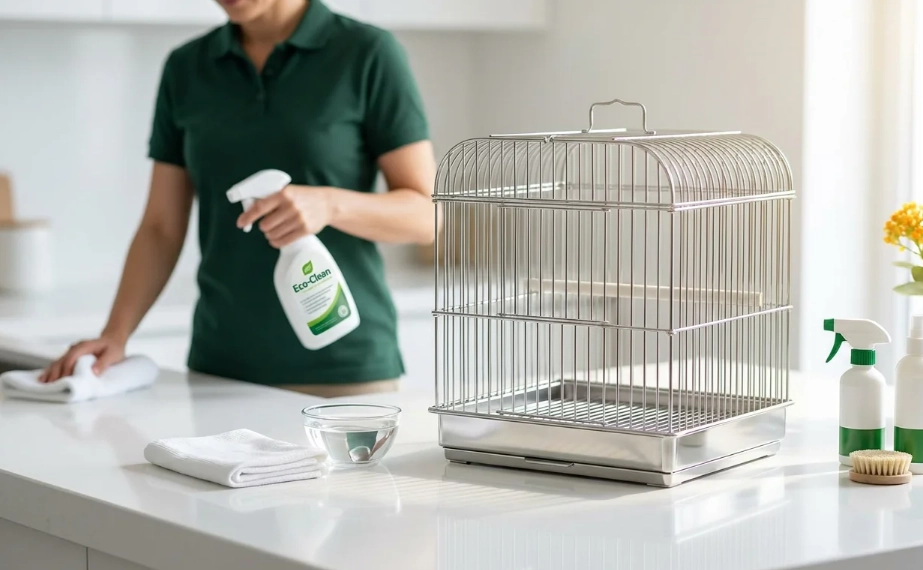
Daily bird cage cleaning routine in 10 minutes
This is the part most people skip. Then they wonder why the cage smells by Thursday. I get it. Mornings are rushed. But a short daily pass prevents the weekly job from turning into a rescue mission.
Step 1: Swap cage paper and scrape perches. Pull the tray, roll the paper, and dump it straight into a bin. Do not shake it over the room. Use a plastic scraper or an old credit card to lift stuck droppings from perches. I keep a small spray bottle of plain water for this. Warm water softens droppings in about 30 seconds.
Step 2: Wipe food and water dishes. Rinse with hot water and a dedicated bird-safe brush. Refill. If you use pellets, check for damp spots. Wet pellets grow bacteria fast, and birds will still eat them.
Step 3: Spot-clean cage bars. A microfiber cloth dampened with water handles most splashes. For dried-on bits, use a bird-safe cleaner. Avoid anything with bleach near the bird.
Step 4: Quick floor check. A hand vac or dustpan around the cage catches the flung food. This takes 30 seconds and keeps the room from becoming a seed carpet.
Total time: about 10 minutes. I do this while my African grey is out on a play stand, which keeps him busy and out of the way.
Weekly deep clean: the 30-minute version
Pick a day and stick to it. I do Sundays after breakfast. The bird goes into a travel carrier or a separate room. Never clean with the bird on your shoulder. Fumes and flying debris are real risks.
Start by removing everything: dishes, toys, perches, cage grate, tray. Then work top to bottom.
| Task | Time | Product or method |
|---|---|---|
| Soak dishes and toys | 10 min | Hot water plus a bird-safe soap; scrub with a bottle brush |
| Wipe cage bars and frame | 8 min | Damp microfiber cloth, then dry cloth |
| Scrub grate and tray | 6 min | Stiff brush and warm soapy water; rinse well |
| Clean perches | 5 min | Sand with coarse grit or replace if heavily soiled |
| Dry everything | 5 min | Air dry in a rack; reassemble only when fully dry |
One detail I learned the hard way: do not put perches back wet. Damp wood grows mold in the mounting holes. Let them sit in the sun or near a fan for an extra 10 minutes. Your bird will complain. Ignore it.
Warning: Never mix bleach with anything. Even bird-safe cleaners should be used in a ventilated room, away from the bird. If you can smell it, the bird can too, and their lungs are far more sensitive than ours.
Monthly reset: what most routines miss
Once a month, go further. This is where a bird cage cleaning schedule earns its keep. Take the cage apart if it is a model with removable panels. Check the corners where seed hulls pile up. I find more hidden mess behind the food dish holder than anywhere else.
Replace worn perches and chewed toys. Wash the cage cover in hot water. Wipe down the wall behind the cage with a damp cloth. If you have a wooden stand, check the joints for droppings. A cotton swab dipped in warm water gets into those tight spots.
This monthly pass takes about an hour, but it prevents the two-hour emergency clean that happens when guests are coming over.
Tools that actually work (and what I stopped buying)
You do not need a cabinet of specialty products. My kit is small: a stiff plastic brush, a bottle brush, two microfiber cloths, a plastic scraper, and a bird-safe cleaner. That is it. I tried enzyme cleaners and fancy foaming sprays. Most of them cost more and work no better than hot water and elbow grease.
One tool I do recommend: a small hand vacuum kept near the cage. It turns the daily floor check into a 15-second job. Just make sure your bird is not out when you use it. The noise spooks most birds.
Personal tip: Keep a dedicated cleaning caddy. Mine is a cheap plastic bin with a handle. Everything lives there. No hunting for the brush under the sink while the bird yells at you.
Mistakes to avoid in your bird cage cleaning routine
These are the ones I see repeated by new bird owners, and a few I made myself.
- Cleaning with the bird in the room. Dust and fumes travel. Move the bird first, always.
- Using bleach or pine-scented cleaners. These are toxic to birds. Plain hot water and bird-safe soap do the job.
- Skipping the food dishes. Dishes build up invisible biofilm. Scrub them daily, not just rinse.
- Putting wet toys back. Mold is a silent problem. Dry everything fully.
- Ignoring the cage cover. It traps dust and dander. Wash it monthly.
One non-obvious mistake: over-cleaning can stress some birds. If your parrot screams every time you move the cage, try cleaning in smaller chunks. Ten minutes here, ten minutes there. The routine still works, and your bird stays calmer.
FAQ: real questions from bird owners
My bird cage smells after two days. What am I doing wrong?
Check the perches. Droppings soaked into wood are usually the source. Scrape and sand them, or replace. Also check the food dish holder area. Wet pellets left in a corner turn sour fast. A daily paper swap fixes most smell issues.
Can I use vinegar to clean my bird cage?
White vinegar diluted with water is a decent mild cleaner for cages, and it is safe if you rinse and dry thoroughly. But do not use it as a daily spray around the bird. The smell is strong, and birds have sensitive respiratory systems. Use it for deep cleans only, with good ventilation.
How often should I replace cage paper?
Daily. Some owners do it twice a day for messy eaters. If the paper is damp, change it immediately. Damp paper grows bacteria and mold. I keep a stack of pre-cut paper near the cage so it takes seconds.
My bird freaks out when I clean. Any tips?
Clean in short bursts, and do the noisy steps (vacuuming, scraping) while the bird is in another room. Also, reward calm behavior with a treat after each session. Over a few weeks, most birds settle. If your bird is a rescue with a rough history, give it more time and keep movements slow.
This routine is not glamorous. But it works. Once you get the order down, the whole thing becomes muscle memory. Your bird stays healthier, your room smells better, and you stop dreading cage day.
Fact-checked against general avian husbandry guidance from veterinary sources and long-term keeper experience.
Comments