Backyard Birds Identification: How to Tell 12 Common Species Apart (Without a Photo Guide)
I have been filling feeders on the same quarter-acre lot for ten years. The first two years, I misidentified every other bird. A house finch? Purple finch? Downy woodpecker? I would stare, flip through a guide, and still guess wrong. The problem was never the guide. It was my process. Backyard birds identification gets easier when you stop trying to match a picture and start looking at four specific field marks, in the same order, every time.
The Four-Mark Routine That Cuts Misidentifications in Half
Most beginners look at color first. That's backwards. Color lies to you in bad light, molting season, and through dirty windows. My routine checks these four things in order: bill shape, overall body posture, tail length relative to body, and leg color. If I still need color, I look at the back and wings, not the breast.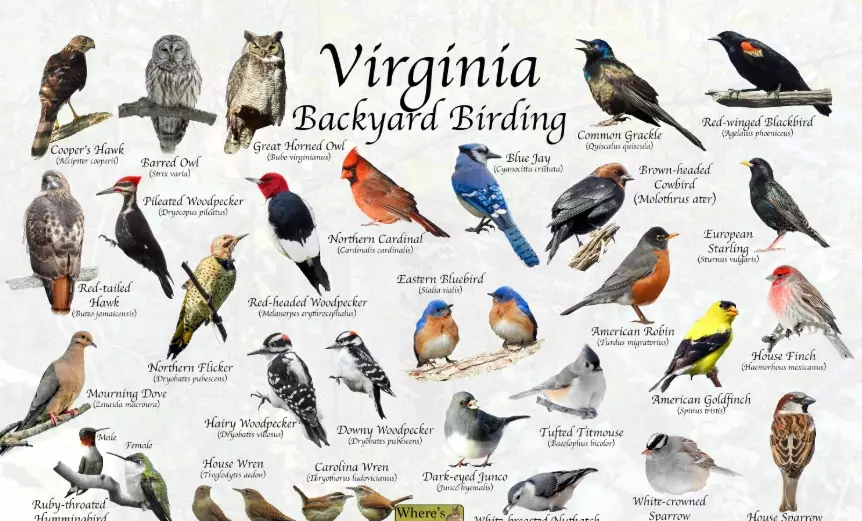
Here is why this matters. Last April, a birder in my local Audubon chapter swore she had a rose-breasted grosbeak. It was a house finch with a smear of jelly on its chest. The bill gave it away instantly: grosbeaks have heavy, conical bills that look like they could crack a walnut. House finches have a short, slightly curved bill built for seeds, but nowhere near that mass.
The 6 Confusing Pairs (and Exactly How to Split Them)
These are the pairs that trip up almost everyone I've taken birding. Look at the specific mark, not the vibe.
1. House Finch vs. Purple Finch
The common backyard finch is the house finch. The purple finch looks like someone dipped it in raspberry jam. The decisive mark is the wing: purple finches have a brownish wing with a reddish wash across the coverts. House finches show two crisp white wing bars. If the bird is on a feeder and the wing bars are blurry-brown, it's a house finch.
2. Downy vs. Hairy Woodpecker
Downies are the size of a sparrow. Hairy woodpeckers are closer to a robin. Size is the first clue, but the bill is the lock: a downy's bill is about one-third the length of its head. A hairy's bill is nearly as long as its head. If you see a woodpecker on suet and you're not sure, look at the outer tail feathers: downies have black spots, hairies have pure white.
3. American Robin vs. Varied Thrush (West Coast)
On the West Coast, the varied thrush shows up in winter and fooled me for a solid month. It has an orange breast like a robin, but a dark band across the chest and orange wing bars. Robins have a plain dark back; varied thrushes have a slate-blue back with orange wing markings. If the bird is scratching in leaf litter under a cedar, check the wing bars first.
4. Black-capped vs. Carolina Chickadee
These two barely overlap geographically (black-capped north, Carolina south), but in the narrow contact zone they hybridize. Black-capped has a white edge on the wing feathers; Carolina's wing is more uniform gray. Also, the black-capped's bib is more ragged. Listen too: black-capped says chick-a-dee-dee with a slower rhythm.
5. Common Grackle vs. European Starling
A grackle in shade looks black. A starling in nonbreeding plumage looks black with white speckles. Grackles have pale yellow eyes and a long, wedge-shaped tail. Starlings have dark eyes in winter and short, square tails. I see people mislabel starlings as grackles constantly on neighborhood bird apps.
6. Mourning Dove vs. Eurasian Collared-Dove
Collared-doves are bigger, paler, and have a black crescent on the back of the neck. Mourning doves have black spots on the wing and a long, pointed tail with white edges. If the bird is perched on a power line and looks oversized for a dove, check the neck collar.
My Feeder Log: What Actually Shows Up and When
I keep a simple paper log by the window. Not an app. Paper. It forces me to write down what I saw at the moment, not what I think I saw later. Here are the patterns from ten years on the same property in the Mid-Atlantic region, plus notes from birder friends in the Pacific Northwest and Southeast.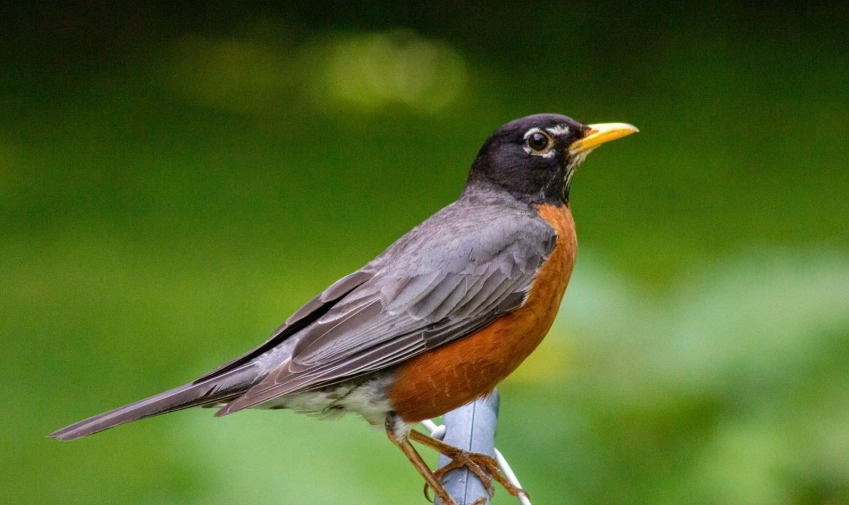
| Species | Arrival / Peak | Feeder Preference | Typical Count (daily) |
|---|---|---|---|
| House Finch | Year-round; peak late winter | Black oil sunflower, nyjer | 4–10 |
| Northern Cardinal | Year-round; dawn and dusk | Large seeds, safflower | 2–4 |
| Blue Jay | Fall and winter | Peanuts, suet | 2–6 |
| Downy Woodpecker | Year-round | Suet, sunflower | 1–2 |
| American Goldfinch | Spring through fall | Nyjer, sunflower hearts | 3–8 |
| White-breasted Nuthatch | Year-round | Suet, peanuts | 1–2 |
One thing the table doesn't show: weather drives everything. Two days of rain and the cardinals vanish. A cold snap in February and the blue jays appear like they were waiting for the invitation. If you're trying to identify a bird and it's not on your regular log, the weather that week is your first clue.
Gear That Helps (and One Thing That Doesn't)
A decent pair of 8x42 binoculars is the single best purchase. I resisted for years, thinking my eyes were fine. They weren't. The moment I could see a downy's bill length clearly, half my confusion disappeared. My current pair cost about $250 and has held up to being dropped on a brick patio twice.
What didn't help: the expensive bird identification app I subscribed to for a year. It kept suggesting rare vagrants based on a blurry phone photo. I spent two weeks convinced I had a painted bunting. It was a house finch with a stained beak. The app had a 30% confidence score. I ignored that number. Don't do that. Look at the confidence score, then go back to the four-mark routine.
Behavior Clues Most Beginners Ignore
Two birds can look identical on a branch and completely different in motion. A white-breasted nuthatch walks down a tree headfirst. A brown creeper walks up. Chickadees hang upside down on thin twigs; house finches don't. If you're stuck on a silent bird, watch its feet for ten seconds.
Also, listen. Not for songs, but for alarm calls. The Cornell Lab of Ornithology has an excellent free library of calls. Blue jays mimic red-shouldered hawks so often that a local birder I know calls them "the neighborhood liar." If you hear a hawk and see a blue jay, trust your eyes over your ears.
What People Ask Me Most
Identification gets easier the moment you stop chasing color and start watching structure. That first winter, I misidentified a downy as a hairy three times in one week. Now I can call it from across the yard. The difference wasn't a better guide. It was a routine I trusted.
This article was fact-checked against field guides and regional birding association reports for accuracy.

Comments