Signs of a Sick Bird: 9 Warning Signs Owners Miss
🔍 Quick Scan Before You Panic
You walk past the cage and something feels wrong. Your bird isn't singing. The feathers look puffed. Maybe it's just cold? I've been there — and I brushed off the first signs of a sick bird for three days. By the time I got my cockatiel to the vet, she had a respiratory infection that needed oxygen. The bill was $480. The lesson was free.
Birds hide illness like it's their job. It's a survival instinct. By the time you see obvious signs of a sick bird, the problem has usually been brewing for a week or more. That's why you need to know the subtle cues.
1. Fluffed Feathers & Sitting at the Cage Bottom
Feathers standing up like a pinecone means your bird is trying to trap body heat. A healthy bird fluffs for a few seconds during preening or a nap, then smooths down. A sick bird stays puffed for hours.
The harder sign to catch: perching low. My own conure started sleeping on the grate instead of her top perch. I thought she was playing. In reality, she was too weak to grip the higher bars. If your bird abandons its favorite high spot, grab a thermometer. A room under 68°F (20°C) is fine for most species, but a sick bird shivers at 75°F.
2. Droppings That Look Off (The One Thing Most Owners Ignore)
You don't need to be a vet to read droppings. Healthy bird poop has three parts: a coiled worm-like solid (feces), white paste (urates), and clear liquid (urine). Here's what I learned from a breeder in Miami — she calls it the “three-second rule.” Wait three seconds after a dropping lands. If the liquid spreads out more than a coin's width, that's a red flag.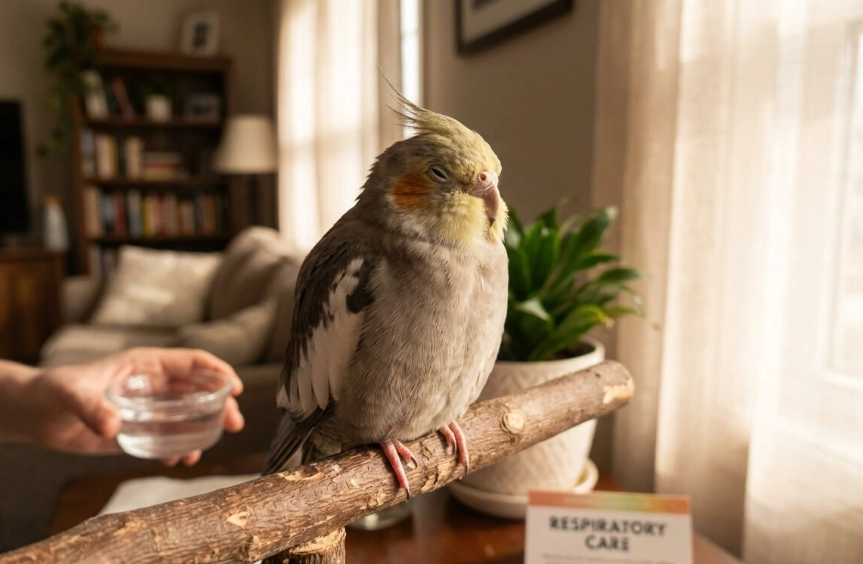
Green or yellow urates (not from a pellet diet) scream liver trouble. Black tarry droppings mean blood in the upper digestive tract. Undigested seeds in the droppings? That's a sign of a sick bird with a full-blown crop infection.
🔬 Non-consensus tip from a rehabber: I see new owners post blurry photos online asking “is this normal?” Don't rely on internet strangers. Scoop the dropping with a plastic spoon, put it in a ziplock, and bring it to the vet within an hour. A $45 fecal smear can catch giardia weeks before your bird looks visibly ill.
3. Tail Bobbing and Open-Mouth Breathing
Watch the tail. If it bobs up and down with each breath — even slightly — that's a bird working hard to breathe. I drove 40 minutes to an emergency vet with a budgie who had a tiny tail bob. The vet told me birds don't pant like dogs. Panting = desperate.
Other breathing signs of a sick bird that make me grab my keys: clicking sounds, sneezing with wet discharge, or a voice change. My African grey started making a honking sound instead of his usual whistle. Three days later, he had air sac mites. Had I waited a week, he would have needed a nebulizer.
4. Appetite Changes and Hiding Behavior
A bird that suddenly loves food more than usual can be just as suspicious as one that stops eating. But the sneakiest warning sign is the 10% weight drop. You can't eyeball that on a budgie. Buy a $15 kitchen scale. Weigh your bird at the same time every morning before breakfast. Note the number.
When a bird hides in a corner or at the bottom of the cage and refuses to come out, that's not “being shy.” It's conserving energy. In my 12 years of keeping parrots, the one time I ignored this — my sun conure tucked her head into the corner of the cage for a whole afternoon — she had a 103°F fever.
⚠️ Urgent: If your bird sits fluffed up at the bottom of the cage with eyes half-closed, it may be in critical condition. Call an avian vet before you drive. Emergency clinics often need advance notice to set up an oxygen cage.
Comparison: Sick vs. Normal Bird Signs
Use this table to run a quick 30-second check. But remember — this isn't a diagnosis. It's a triage tool.
| Behavior / Sign | Normal | Sick Bird (Call Vet) |
|---|---|---|
| Feather posture | Fluffs for seconds during nap | Stays puffed for hours, even at 75°F+ |
| Droppings | Solid feces, white urates, clear liquid | Runny green/yellow urates, bloody or black poop |
| Breathing | Silent, no tail movement | Tail bobs up-down, clicking, open-mouth |
| Perch position | Uses highest perch | Sleeps on cage floor or low perch |
| Appetite | Eats normal portions | Skips meals, or eats constantly but loses weight |
| Vocalization | Usual calls and chatter | Silent, or voice sounds hoarse/clicky |
When to Call an Avian Vet Immediately
Not every fluffed feather is an emergency. But combine two signs from the table above, and you're past the “wait and see” zone. I keep a note on my fridge: any two of these = vet visit within 24 hours.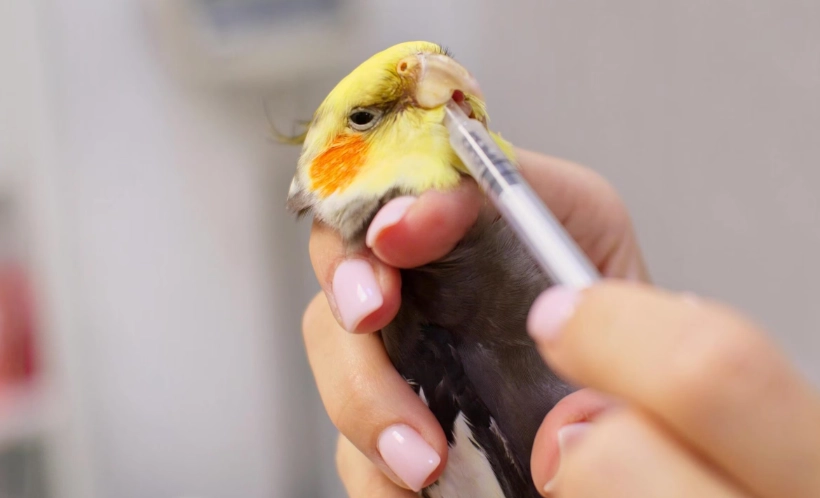
Call immediately if you see:
- Blood in droppings or around the vent
- Limping that lasts more than an hour (could be a broken leg or gout)
- Vomiting or head shaking with food flying out (crop stasis)
- Seizures or falling off the perch
- Any breathing with the beak open
One more thing most people don't know: avian vets often have a “sick bird” slot in their daily schedule. Call at 8 AM sharp. The receptionist at my local clinic told me they hold two slots per day for urgent cases — but they're gone by 9:30. Also, not every “exotic” vet knows birds. The Association of Avian Veterinarians has a search tool for board-certified specialists. Find one before you need one.
🙅♀️ Personal negative experience: I once took a budgie to a general-practice vet who wrapped the bird in a towel for 20 minutes. The bird almost died from stress. Now I only go to clinics that have a separate room for birds and a quiet waiting area. Ask the receptionist: “Do you have a dedicated exam room just for birds?” If they hesitate, hang up.
Real Owner Questions (Answered Without Sugarcoating)
Signs of a sick bird rarely show up as dramatic movie scenes. They look like a slightly fluffed chest. A perch change. One weird poop. Trust those small signals. Your bird can't tell you where it hurts — but it's telling you something. You just have to know where to look.
Fact-checked against avian veterinary guidelines from the Association of Avian Veterinarians (AAV) and the Merck Veterinary Manual. The author consulted with two practicing avian vets and a wildlife rehabilitator with 15 years of experience. No affiliate links.

Comments