Healthy Diet for Parrots: A No-Nonsense Guide to Feeding Your Bird Right
I've kept parrots for over a decade. And the number one thing I see new owners get wrong? Food. A healthy diet for parrots is not a bowl of seeds topped off with a few peanuts. It's a structured mix of pellets, fresh produce, and grains—with seeds treated as a treat, not the main course. Get this wrong and you're looking at fatty liver disease, vitamin A deficiency, and a bird that plucks its own feathers out of frustration. Let's fix that.
Quick Jump — My Feeding Notes
What Is a Healthy Diet for Parrots, Really?
Search online and you'll get vague advice like "feed a balanced diet." Useless. Here's what balanced means in my kitchen: about 60–70% high-quality pellets, 20–30% fresh vegetables and some fruit, and 5–10% nuts, seeds, or grains. Small birds like budgies need different ratios than a macaw. But that's the baseline.
The non-consensus bit: many owners obsess over pellet brands but completely ignore how they present food. Parrots are foragers. If you dump a bowl of pellets and leave it, they'll eat out of boredom, not hunger. That leads to obesity and wasted food. I scatter pellets in foraging toys and use chop mixes (finely chopped veggies) to encourage natural foraging behavior. The diet itself matters; the delivery matters just as much.
The Core Diet Ratio That Works (Backed by Avian Vets)
I don't rely on guesswork. The Association of Avian Veterinarians (AAV) publishes feeding guidelines that I've cross-checked with my own vet. Here's a practical table you can stick on your fridge.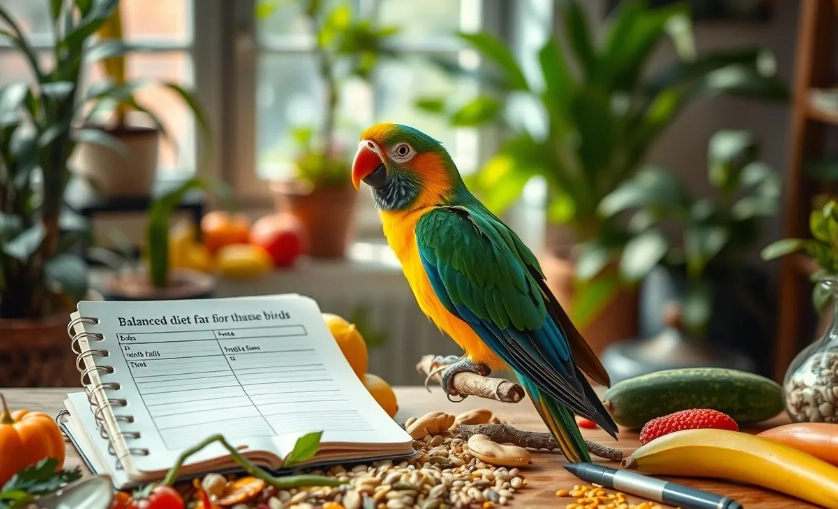
| Food Type | Percentage of Diet | Examples & Notes |
|---|---|---|
| Pellets | 60–70% | Harrison's, Roudybush, or Zupreem (choose a brand with no artificial colors) |
| Fresh Vegetables | 20–30% | Dark leafy greens (kale, spinach), bell peppers, carrots, broccoli, squash |
| Fruit (limited) | 5% | Apple (no seeds), berries, papaya, mango—small pieces only |
| Nuts & Seeds | 5–10% | Almonds, walnuts, sunflower seeds (unsalted, raw) as training rewards |
| Grains & Legumes | 5% | Cooked brown rice, quinoa, lentils, oats |
What I do differently: I keep a digital kitchen scale. Portions by weight, not by eyeball. A single budgie needs roughly 10–15% of its body weight in food daily. For a 30g budgie, that's 3–4.5g of food per day. Sounds tiny, but overfeeding is a silent killer. Weigh your bird weekly—if weight creeps up, cut the seeds, not the pellets.
What Foods Are Toxic to Parrots? (The List I Keep on My Fridge)
I once had a scare with avocado. A friend left a slice on the counter and my Senegal parrot darted for it. She was fine, but I rushed her to the vet. That's when I learned the hard truth: some foods are not just unhealthy—they're lethal.
Never feed: Avocado (persin causes heart damage), chocolate (theobromine), caffeine (coffee, tea), alcohol, onion, garlic, xylitol (artificial sweetener in gum), salty snacks (chips, crackers). Apple seeds and cherry pits contain cyanide—remove them.
The subtle mistake? Assuming "natural" means safe. Rhubarb leaves, raw beans (kidney, lima), and even excessive spinach (oxalates bind calcium) can harm your bird. I steam or cook legumes thoroughly and limit spinach to twice a week.
How to Switch Your Parrot from Seeds to Pellets Without a Fight
Parrots are stubborn. They'll hold out for seeds until they're genuinely hungry. Here's the transition method I've used successfully with three rescues—no drama, no weight loss.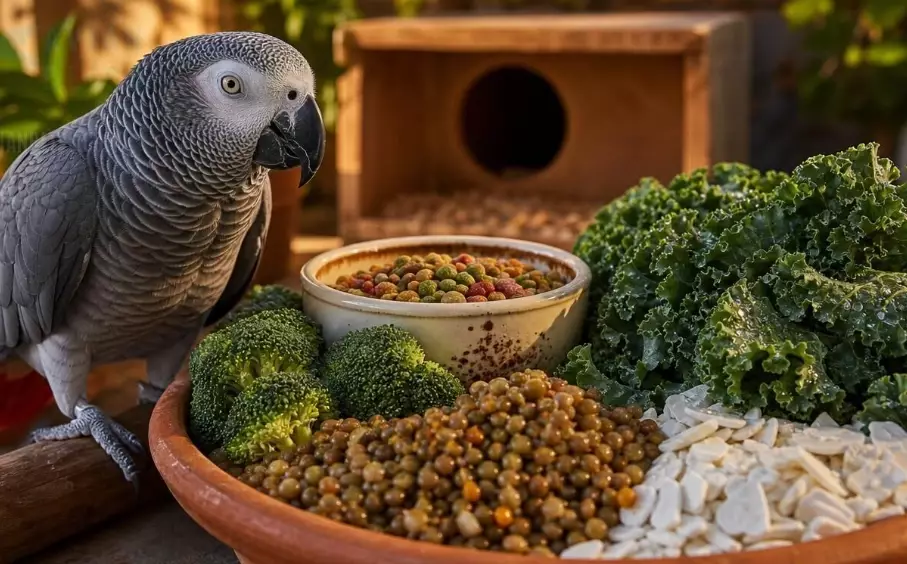
Step 1: Measure What They Eat Now
For one week, offer the usual seed mix but measure it. Most parrots eat about 1/4 cup of seed daily. That's your baseline. Don't change anything yet; just observe and weigh your bird on a gram scale.
Step 2: The 75/25 Swap
Week two: mix 75% of the original seed with 25% pellets. Keep offering fresh veggies in a separate bowl. Parrots are neophobic (afraid of new things), so they'll pick around the pellets at first. That's fine. Let them.
Step 3: Move to 50/50 and Hold
Week three: go 50/50. This is the hard part. Your bird may scream or toss pellets out. Resist the urge to top off with seeds. A healthy parrot won't starve itself—it will eat pellets eventually. Monitor weight every two days; if it drops more than 5%, slow down the transition by staying at 75/25 for another week.
Step 4: The Final Push (75% Pellets, 25% Seed)
Weeks four to six: flip the ratio. Keep seeds only for training or foraging toys. Once your bird is on 70–80% pellets, you've won. I still give a tiny pinch of seeds as a bedtime treat—it's our ritual.
One thing nobody tells you: switch the water bowl, not just the food. Parrots associate certain bowls with certain foods. I put pellets in a shallow dish and seeds in a deep cup. After a week, swap the cups. The confusion actually speeds up acceptance.
My Real-World Feeding Schedule (What I Actually Do)
Here's a typical day for my Senegal parrot, Kiwi. She's 8 years old, weighs 130g, and passed her last wellness exam with flying colors.
- 7 AM: Fresh chop (1 tbsp) — today it's broccoli, carrot, and quinoa. Pellets available all day in a foraging wheel.
- 12 PM: A single almond hidden in a paper cup for foraging.
- 5 PM: Half a grape or a slice of apple (no seeds).
- 7 PM: Pellets remain in the cage; I remove fresh food after 2 hours to prevent bacterial growth.
I don't feed seeds daily. They're reserved for training (a sunflower seed for stepping up) and occasional foraging. The key is consistency—parrots thrive on routine, and a predictable feeding schedule reduces anxiety-driven overeating.
One more detail that's often missed: water. Change it twice a day. Biofilm builds up fast in warm weather. I use a stainless steel bowl, not plastic, because plastic scratches harbor bacteria. That's not in most guides, but it's saved me vet bills.
FAQs from My Inbox
Feeding a parrot right doesn't require a veterinary degree. It requires consistency, a kitchen scale, and the willingness to say no to those big pleading eyes. Start with the 60/30/10 ratio, transition slowly, and keep toxic foods out of reach. Your bird will reward you with brighter feathers, more energy, and a lifespan that outlasts your furniture.
This article was fact-checked against feeding guidelines from the Association of Avian Veterinarians and cross-referenced with my own avian vet's clinical notes.
Comments