How Often to Clean a Bird Cage: Real Schedule from a 10-Year Keeper
Short answer up front: spot-clean the cage floor and food dishes every day, do a full paper change and wipe-down once a week, and tear the whole cage apart for a deep scrub once a month. That's the rhythm I've stuck to for ten years with everything from budgies to a very messy African grey.
But here's the thing nobody tells you when you search for how often to clean a bird cage — the "right" frequency depends on your bird's habits, the cage material, and honestly how much mess you're willing to live with. I learned that the hard way after a respiratory infection scare with my first cockatiel, Pip.
The Daily Stuff You Can't Skip (5 Minutes, Tops)
Every morning I do a quick walk-around. Fresh paper on the grate, swap the water, dump the seed hulls from the food bowl. That's it.
The trick is not to turn daily care into a full scrub. I made that mistake in year one — spent 40 minutes every morning scrubbing perches, and my bird started plucking because I kept invading his space. Now I stick to the five-minute rule.
What actually gets done daily:
- Replace cage liner paper (newspaper works fine, but I switched to unprinted newsprint from a local moving supply shop after my vet mentioned ink fumes).
- Rinse and refill water dishes with fresh water — never just top it off.
- Remove fresh food leftovers after two hours (bacteria grow fast on fruit).
- Wipe any visible droppings on perches with a bird-safe wipe.
The Weekly Reset That Changes Everything
Sunday morning is cage day in my house. I take the bird out, put him on a play stand, and do a full paper change plus a wipe-down of the bars, perches, and food station.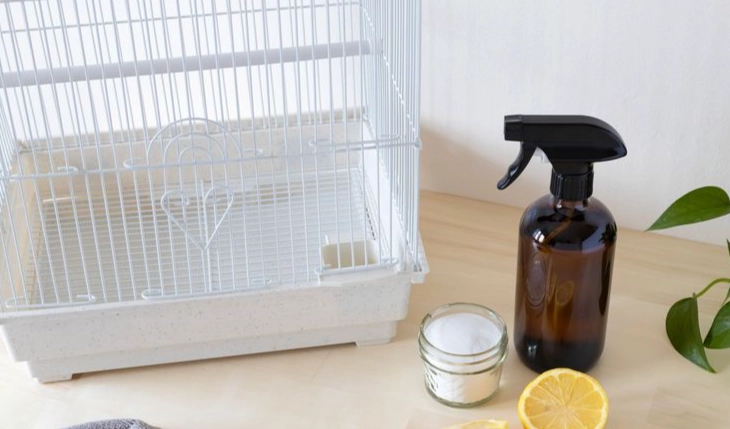
This is where I see most owners fall short. They scrub the bottom tray but forget the perches. Perches get coated in droppings and dried food. I've seen birds develop foot infections from dirty natural wood perches. Scrub them with a stiff brush and hot water, then let them air-dry in the sun if possible.
Weekly checklist:
- Remove all toys and inspect for wear — replace any with frayed rope or cracked bells.
- Wash food and water bowls with a mild dish soap, rinse thoroughly.
- Wipe cage bars with a 50/50 white vinegar and water solution (cheap and bird-safe).
- Rotate toys — clean the ones that stay in, swap out the ones that need a rest.
I started timing my weekly clean after reading a post from the Association of Avian Veterinarians about environmental hygiene — it emphasized that weekly cleaning isn't about being perfect, it's about breaking the bacterial growth cycle. That stuck with me.
Monthly Deep Clean: My Exact Process
Once a month, the cage goes outside. I disassemble everything, scrub the entire frame with a bird-safe cleaner (I use diluted F10SC, which my vet recommended), and let it bake in the sun for an hour.
Here's the step-by-step I follow:
| Step | What I Do | Time Needed |
|---|---|---|
| 1 | Move bird to a safe room in a travel carrier | 2 minutes |
| 2 | Take cage apart — remove trays, grates, perches, toys | 5 minutes |
| 3 | Scrub bars and frame with F10SC solution and a brush | 10 minutes |
| 4 | Soak perches in hot water + vinegar for 20 minutes | 20 minutes |
| 5 | Sun-dry everything (UV helps kill bacteria) | 60 minutes |
| 6 | Reassemble with fresh paper and clean toys | 5 minutes |
That's roughly 100 minutes of actual work per month. Not bad for peace of mind.
How Often to Clean by Bird Species (Because They're Not All the Same)
I've kept four species over the years, and the mess level varies wildly. Here's my honest breakdown: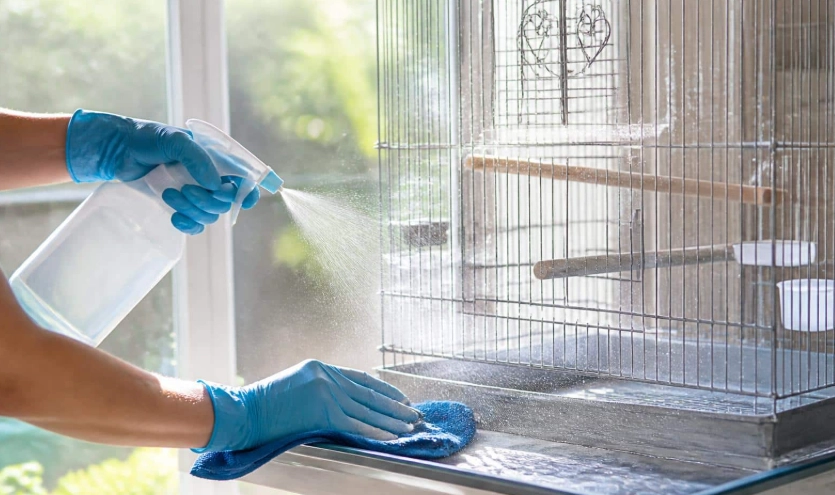
| Bird Type | Daily Clean | Full Cage Clean | Deep Clean |
|---|---|---|---|
| Budgie / Parakeet | Yes | Every 5–7 days | Every 4 weeks |
| Cockatiel | Yes | Every 5 days (they're dusty) | Every 3–4 weeks |
| African Grey | Yes | Every 3–4 days | Every 3 weeks |
| Lovebird | Yes | Every 7 days | Every 4 weeks |
The African grey row might surprise you. They produce more dust (powder down) and fling food farther than any other bird I've owned. I learned to wipe the wall behind the cage weekly, not just the cage itself.
Three Cleaning Mistakes I See All the Time
1. Over-cleaning the nest area. If your bird sleeps in a cozy corner or hut, don't scrub that spot every day. Birds need a familiar scent zone. My cockatiel became anxious when I deep-cleaned his sleep corner twice a week. Now I leave it alone during weekly clean and only touch it monthly.
2. Using the wrong cleaner. I cringe when I see people using kitchen sprays or bleach wipes inside a cage. Birds have incredibly sensitive respiratory systems. Stick to vinegar, hot water, or vet-approved avian cleaners like F10SC. The Pet Poison Helpline lists common household cleaners as toxic to birds — worth a bookmark.
3. Forgetting the food prep area. The cage gets clean, but the counter where you chop fruit? That's where bacteria party. I keep a dedicated bird cutting board and wash it with hot soapy water after every use.
Real Questions from Bird Keepers
My bird sleeps in a fabric hut — how often should I wash it?
Every single week. Fabric holds moisture from droppings and dust, and I've seen mold start on a hut that went two weeks without washing. Toss it in the machine on hot with a fragrance-free detergent, then dry completely. If it's falling apart, replace it — a loose thread can wrap around a toe.
Do I really need to clean the cage bars if the bird doesn't touch them?
Yes, and here's why: dried droppings on bars release microscopic dust when your bird flaps. I watched my grey inhale that dust and start wheezing. Now I wipe bars every week, not just the tray. It takes two minutes with a vinegar spray and a rag.
How often should I replace wooden perches instead of cleaning them?
If a perch has cracks or soft spots, replace it. I swap natural wood perches every 6–8 months, even with weekly scrubbing. Bacteria hide in the grain. My rule: if you can dent it with a fingernail, it's done.
Can I use a steam cleaner on a bird cage?
Only if you can let the cage dry completely before the bird goes back in. Steam kills bacteria well, but leftover moisture creates a perfect environment for fungal growth. I steam-clean the tray once a month and then leave it in the sun for an hour.
Fact-checked against avian veterinary guidance from the Association of Avian Veterinarians and my own decade of cage-keeping.

Comments