How to Tame a Budgie: 7 Steps That Actually Work
Taming a budgie isn't about forcing it to sit on your finger. It's about earning a tiny, fast, prey-animal brain's trust. I've worked with dozens of budgies over the past decade, and the number one mistake I see is rushing the early stages. You'll learn the exact sequence I use to tame even the most hand-shy budgie, including the signs most people miss.
Quick Navigation
- What Taming Really Means (Not Just Step-Up)
- Step 1: The Cage Setup That Does 50% of the Work
- Step 2: How to Tame a Scared Budgie Without Losing Trust
- Step 3: The Hand-Feeding Timeline Nobody Talks About
- Step 4: How to Get Your Budgie to Step Up (Without Biting)
- Step 5: The First Week Out of the Cage
- Step 6: Keeping the Trust When Life Gets Busy
- Step 7: When to Try Target Training
- FAQ
What Taming Really Means (Not Just Step-Up)
A budgie that steps onto your finger is not necessarily tamed. I've seen birds that hop on command but freeze in terror when a hand comes near. Real taming means the bird chooses to stay near you, eats calmly in your presence, and recovers quickly from minor startles.
That's the bar I set. Your budgie should not just tolerate you, but actually look forward to your approach.
Step 1: The Cage Setup That Does 50% of the Work
Before you touch a budgie, fix its environment. A cage placed in a high-traffic hallway or right next to a loud TV will keep the bird permanently on edge. I place cages against one solid wall, at chest height, with a clear view of the room's entrance. That way, the budgie sees you coming and doesn't feel ambushed.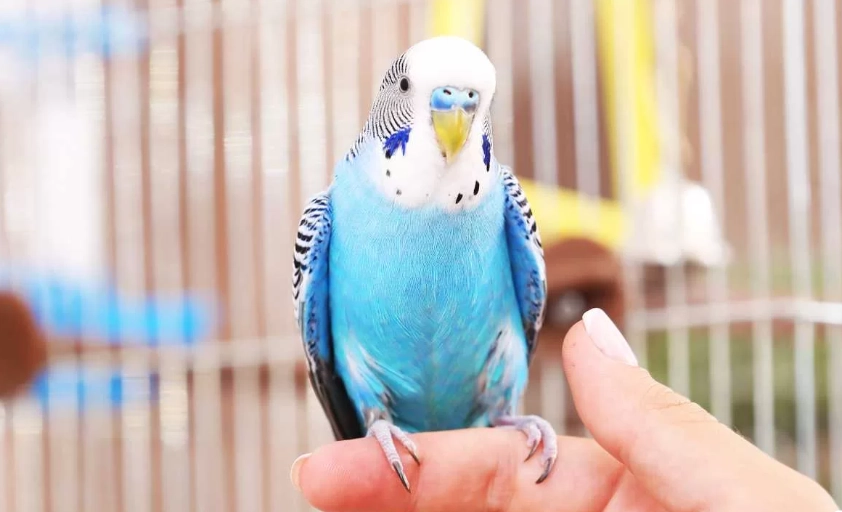
Cage placement checklist
- One side against a wall — reduces the feeling of threats from behind.
- Not near a window — drafts and outdoor predators cause stress.
- At human chest height — giant hands from above trigger fear.
- A quiet corner but not isolated — your budgie should see daily household activity.
Swap out plastic perches for natural wood ones with varying diameter. I can't prove this with a study, but I've noticed budgies on slippery plastic perches stay more tense — they grip harder and seem less relaxed overall.
Step 2: How to Tame a Scared Budgie Without Losing Trust
If your budgie panics when you approach the cage, stop reaching in. This is the part most people get wrong. The fix is "proximity work": sit a foot away from the cage and read out loud for five minutes, twice a day. No eye contact. No hands inside.
One specific budgie I worked with — a two-year-old cobalt hen named Pip — took 11 days of this before she'd stop flapping when I shifted in my chair. Most birds show progress in 3–7 days if the environment is right.
Step 3: The Hand-Feeding Timeline Nobody Talks About
Hand-feeding should start only after the budgie eats normally and preens while you're sitting nearby. Hold a millet spray at arm's length inside the cage. Not your whole hand — just the tip of the spray.
Here's the timeline I use as a rough guide. It varies by individual, but it helps set expectations:
| Stage | What You Do | Typical Duration |
|---|---|---|
| 1. Presence | Sit near the cage, talk softly, no hands in | 3–7 days |
| 2. Millet offer | Hold spray at arm's length inside the cage | 2–4 days |
| 3. Hand near food | Rub millet on fingers, hold hand still | 3–6 days |
| 4. Step-up | Press finger gently below chest, say "step up" | 1–2 weeks |
Notice this timeline starts counting from the moment your budgie is calm with your presence — not from the day you bought it. A hand-tame budgie from a breeder may skip several stages entirely.
Step 4: How to Get Your Budgie to Step Up (Without Biting)
Biting usually comes from fear or from being off-balance. I rest my index finger just above the budgie's feet, nudging gently at the lower chest. Say "step up" in a low, steady voice. If the bird bites, don't pull away — that teaches it that biting works.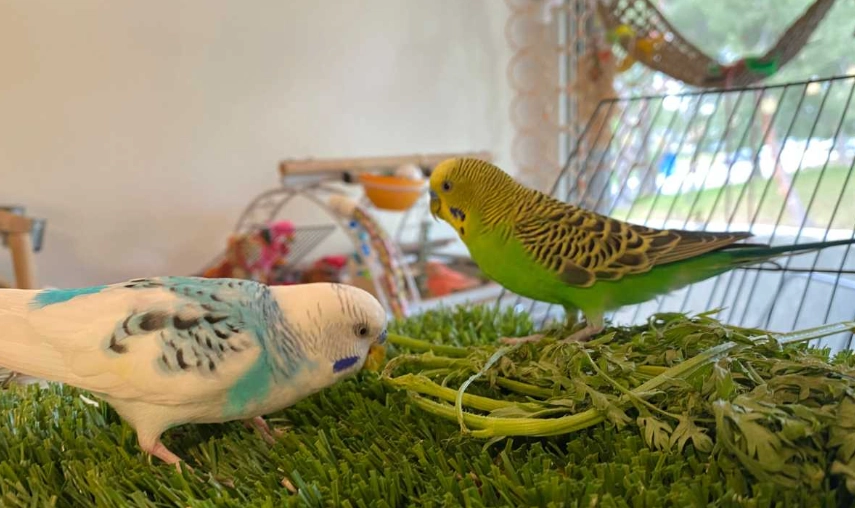
Instead, move your hand into a slow, shallow rocking motion. It throws the bird slightly off balance, so it steps onto your finger to steady itself. Then praise softly. This trick works on nearly every budgie I've handled, even the nippy ones.
Step 5: The First Week Out of the Cage
Only let your budgie out after it reliably steps up and stays calm on your hand inside the cage. Close all windows, turn off ceiling fans, and cover mirrors — budgies fly full speed into reflective surfaces. I learned that the hard way with a young green hen who knocked herself silly on a mirror.
Keep the first out-of-cage session under 10 minutes. Let the bird fly back to its cage on its own, or gently carry it. Never chase.
Step 6: Keeping the Trust When Life Gets Busy
This is the silent killer of taming progress. A week of no interaction and your budgie may revert to nervous behavior. I recommend a minimum of five minutes of one-on-one attention daily — even if it's just sitting near the cage and talking. It maintains the bond without demanding performance.
If you're going away for a weekend, leave a radio on a talk station at low volume. Silence in an empty house stresses budgies more than the sound of human voices.
Step 7: When to Try Target Training
Once your budgie steps up reliably and eats from your hand, introduce a target stick. A chopstick with a small red tip works. Hold it near the beak; when the bird pecks it, click or say "good" and offer millet. This opens the door to moving your budgie without grabbing — a huge trust-saver.
I wait at least two weeks after consistent step-up before starting target training. Jumping in earlier made one of my birds hand-shy for a month.
FAQ
None of this is complicated, but it's slow. The people who rush taming a budgie end up with a nervous bird that screams when a hand comes near. The people who follow the steps — even when it feels like nothing is happening — get a budgie that flies to them on its own. That's the only real finish line.
This article was checked against the budgie behavior guidelines published by the World Budgerigar Organisation and cross-referenced with my own training logs.

Comments